
We include products we think are useful. If you buy through the links on this page, we may receive a commission.
- Sunscreen allergy or sun allergy? - April 7, 2026
- What is psyllium husk? - April 6, 2026
- Tylenol in the United States: Is it paracetamol? - April 5, 2026
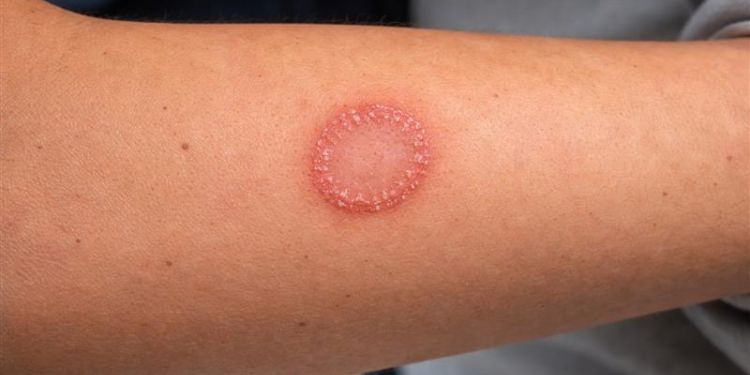
Ringworm typically causes itching, redness, and a characteristic rash that often forms a ring with a more pronounced border. It's important to recognize the symptoms and confirm the diagnosis if it doesn't improve or if it spreads.
What do the symptoms of ringworm look like on the skin?
Ringworm (tinea) can look like other rashes, so it may be confused with different conditions, including tinea versicolor, which is not caused by the same type of fungus.
Ringworm can start as a small area with raised red spots or bumps and, over time, develop into a ring with a raised, red border and a lighter center. The border may appear scaly, and the area may itch.
In some people, a perfect ring isn't visible, and the lesion looks more like a rounded, scaly plaque. Therefore, if its appearance isn't clear, it's sometimes best to have it evaluated by a professional rather than "self-diagnosing" it based on photos.
Where do the symptoms of ringworm appear?
It can appear on the arms, legs, face, or torso, and also in specific areas such as the feet, groin, scalp, or nails. On the scalp, in addition to itching and redness, there may be patchy hair loss, especially in children.
When it affects skin folds like the groin, the border is usually more pronounced, with scaling, while the center may appear less irritated. On nails, the condition doesn't always appear as a "ring" and tends to change color and thickness, something that requires confirmation because there are other similar causes.
How is ringworm transmitted and why can it be confused with other diseases?
Ringworm spreads easily, often through direct skin-to-skin contact or contact with infected animals. It can also be transmitted through shared, damp objects or surfaces, such as towels, shoes, or changing room floors, although confirmation depends on the specific case.
It can be confused with other itchy, scaly rashes, such as certain types of dermatitis or conditions that initially appear similar. If the lesion does not improve after a reasonable time or spreads, it is best to confirm the diagnosis in a doctor's office, because the correct treatment depends on accurately identifying the cause.
When is it advisable to seek medical evaluation?
If the rash doesn't improve after using an over-the-counter topical antifungal for a short time, or if it spreads, it's advisable to seek medical evaluation. It's also recommended to consult a doctor if it affects the scalp, nails, young children, or if there are many lesions, as the treatment may differ.
A pharmacy can provide guidance on over-the-counter options for mild cases, but diagnostic confirmation and follow-up are the responsibility of the doctor when there are doubts, relapses, or spread.
This text is for informational purposes only and does not replace medical advice. Always consult the official package leaflet and follow the instructions of your doctor or pharmacist.