We include products we think are useful. If you buy through the links on this page, we may receive a commission.
- Does an electric toothbrush help with gingivitis? - April 2, 2026
- How much does omeprazole cost in Spain? - April 1, 2026
- Hay fever in the UK: what it is and when it gets worse - March 31, 2026
Tinea versicolor is a superficial fungal skin infection that often shows up as lighter or darker patches, most commonly on the trunk and shoulders, and it does not spread from person to person.
In practice, it is usually related to a yeast called Malassezia that can live on the skin without causing problems and, under certain conditions, grow more than usual and alter the color of small areas, which is noticeable when looking in the mirror.
What is tinea versicolor?
It is a superficial mycosis, also called pityriasis versicolor, which affects the outer layer of the skin and changes the appearance of the pigmentation in patches, without implying a deep infection, something that helps to understand why it is usually bothersome for its appearance rather than for severity.
How is tinea versicolor recognized on the skin?
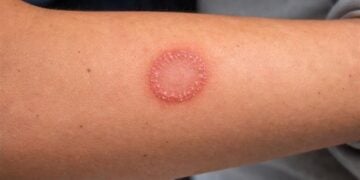
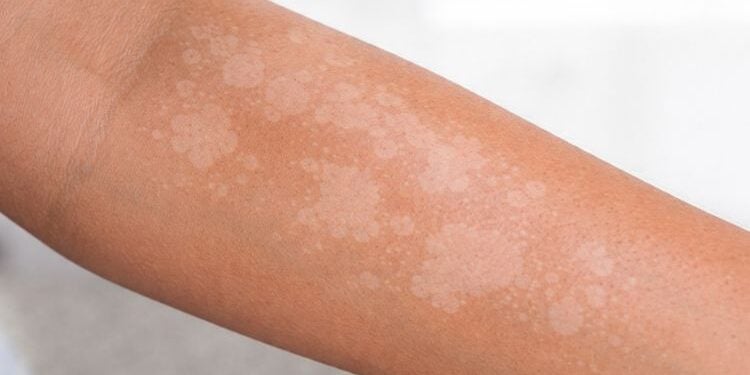
It usually appears as flat patches, lighter or darker than the rest of the skin, sometimes with a fine and discreet scaling, and tends to appear on the chest, back, neck or upper arms, especially when it is hot or there is more sweating.
Tinea versicolor and vitiligo: key differences to avoid confusing them
The following comparison is for guidance only because several conditions can look similar, and if there are any doubts, it is advisable to confirm the diagnosis in a consultation before treating it on your own.
| Frequent signal | It might be a better fit with |
|---|---|
| Spots with slight fine flaking | Tinea versicolor |
| Clear white patches without flaking | Vitiligo |
Is it contagious or dangerous?
It is not an infection that is transmitted by contact between people and, in general, it is considered a common and treatable problem, although it can reappear and the normalization of skin color may take longer than the improvement of the fungus itself.
When is it advisable to consult a doctor?
It's advisable to consult a doctor if the spots spread, change rapidly, itch intensely, if you have doubts about other causes of spots, or if you're unsure whether it's tinea versicolor, because a professional can confirm it through examination and, if necessary, with simple tests.
This text is for informational purposes only and does not replace medical advice. For proper diagnosis and treatment, always consult the healthcare professional's instructions and the official product information for any prescribed or recommended product.