
We include products we think are useful. If you buy through the links on this page, we may receive a commission.

- Lower back heat patches: when to use them and when not to - April 9, 2026
- Is a dental irrigator suitable for use with braces? - April 8, 2026
- What is the equivalent of Paxil in Spain? - March 27, 2026
Lower back heat patches can relieve localized muscle discomfort and stiffness, but they aren't equally effective for all back pain. They tend to be more suitable when the discomfort feels like a muscle strain or overuse and there are no other warning signs.
When are lumbar heat patches appropriate?
This type of patch is usually more effective when the lower back is tense, stiff, or strained after exertion, prolonged sitting, or poor posture. In these cases, heat can be more soothing than other measures and help relax the muscles.
It's not a solution for all lower back pain. If the discomfort started after a recent blow, a sprain with visible swelling, or a very recent injury, cold is usually more effective at first than heat.
What else can be done besides applying a patch if there is lower back pain?
In common lower back pain, staying in bed for many days is usually not helpful and can prolong recovery. Local heat can provide relief, but it is not a substitute for walking, changing position frequently, and gradually resuming activity as tolerated.
If you want to compare this approach with other options for back pain, it makes more sense as short-term support than as the only step.
Local heat
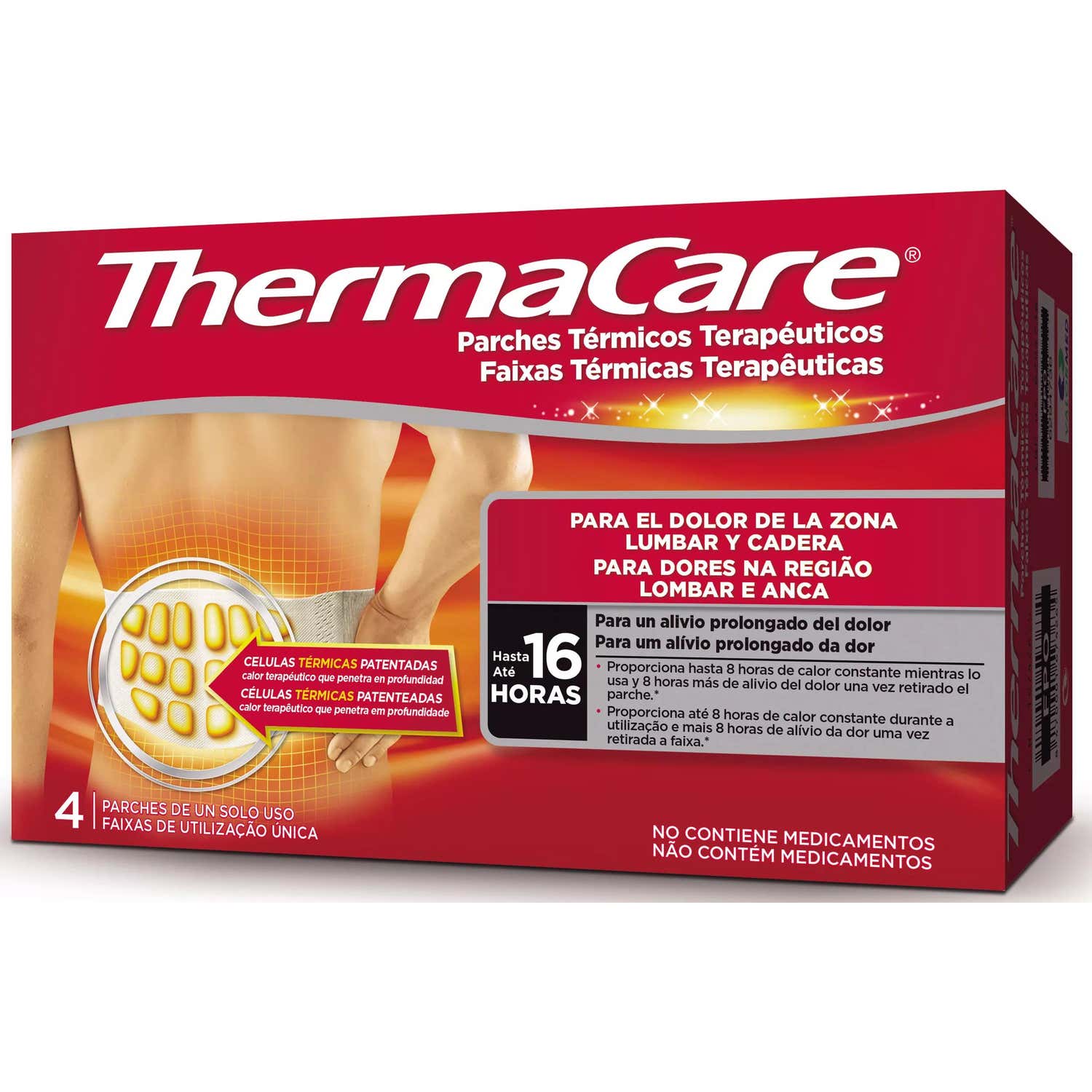
Why it might fit
- Designed for the lumbar region.
- It might be suitable if you're looking for localized heat without gels or creams.
- Four units to have a spare at home or while traveling.
What should be valued
- It does not replace an evaluation if the pain changes, worsens, or appears with warning signs.
When is it not advisable to continue with local heat?
A lumbar heat patch can be useful for occasional relief, but direct heat should be avoided on irritated, injured, or very sensitive skin. Sleeping with a heat source on is also not a good idea, nor is it advisable to continue applying heat if the area worsens or becomes excessively red.
If fever, general malaise, marked weakness in the legs, loss of sensation in the genital area, or problems controlling the bladder or bowel appear, the problem no longer fits with a simple overload and needs urgent evaluation.
What do the guidelines say about lower back pain?
Most episodes of acute lower back pain improve within days or weeks, and guidelines emphasize staying active rather than seeking complete rest. Heat can provide symptomatic relief, especially when stiffness or muscle spasms are predominant.
Back pain guidance also points in the same direction, with movement, self-care and sensible symptom relief taking priority over prolonged rest.
If lower back pain lasts for several weeks, recurs frequently, or severely limits your activity, it's reasonable to consult a doctor to confirm the cause and not continue trying home remedies blindly.
This text is for informational purposes only and does not replace medical advice. Always consult official sources and follow the instructions of your doctor, physiotherapist, or pharmacist.