
We include products we think are useful. If you buy through the links on this page, we may receive a commission.
- What is the equivalent of Celexa in Spain? - March 19, 2026
- Sertraline in Spain: what it is prescribed for and how to obtain it - March 14, 2026
- How much work-related stress is there in Spain? - March 14, 2026
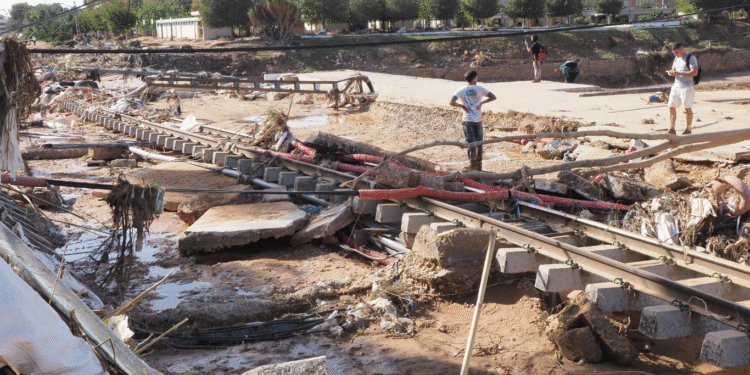
The Mental Health Commissioner offers recommendations to protect the mental health of the population affected by the DANA in Valencia, highlighting social support, reliable information and attention to vulnerable groups.
Commissioner Belén González stresses that facing a catastrophe of this magnitude generates a great psychological impact and emphasizes that the Ministry's support also extends to those who are providing assistance, since the emotional stress in these situations can be considerable.
Mental health in disaster situations: risk factors and vulnerable groups
The psychological consequences of a disaster such as DANA include problems such as anxiety and depression. Vulnerable groups, such as children, the elderly, people with mental health problems, and those in poverty or social exclusion, are especially susceptible to the emotional effects of the crisis.
For those already facing mental health challenges, the floods can exacerbate their condition, increasing the need for specialized care. In this regard, the Ministry of Health has issued recommendations to help the affected population and their caregivers mitigate the emotional impact during this critical phase.
Recommendations for the population affected by the DANA in Valencia
Seek support from those close to you: It is important to maintain contact with family, friends and neighbours as this helps to combat isolation and allows people to express their emotions. It is also important to participate in local aid activities.
Avoid overexposure to information: It is important to turn to reliable sources and avoid rumors or confusing information, which can reduce uncertainty and stress.
Caring for the most vulnerable: Talking calmly to children and adults, maintaining stable activities and routines, can provide them with an emotionally safe environment.
Maintain basic routines Establishing schedules for daily activities helps reduce chaos. Continuing with chronic medication, especially in the case of psychotropic drugs, is essential. In case of lack of access, seek medical attention.
Helping those with high levels of distress: If someone shows signs of deep suffering, suicidal thoughts or abnormal behavior, it is recommended to offer help or accompany them to an emergency room to receive immediate psychological support.
Common symptoms and when to seek help
During the first few weeks after a disaster, it is normal to experience sleep problems, crying, intrusive thoughts or anxiety. Talking to people close to you can be very helpful. However, if these symptoms persist or are difficult to control, it is important to seek professional help from health services.
Recommendations for intervention teams
For those working in direct assistance to those affected by DANA in Valencia, the Ministry recommends a psychosocial approach that includes promoting safety and calm, encouraging self-efficacy and teamwork, strengthening ties and connections with the community, transmitting hope and taking care of their well-being in order to help others.
Ongoing support in affected areas
In coordination with the Valencian Community's Office of Mental Health and Addictions, the Mental Health Commissioner has reinforced the presence of professionals in the most affected areas, with home care for seriously ill patients and specialized psychological assistance for the relatives of fatal victims.
This response seeks not only to alleviate the immediate effects, but also to create a long-term support network for psychosocial recovery.
Fundamental principles for psychosocial protection in emergencies
The key principles that guide mental health intervention in emergency situations such as the DANA include respect for human rights and equity, community participation, the principle of not causing further harm, optimization of available resources, and support at multiple levels from basic services and safety to specialized support for those who need it.
The aim of these recommendations is not only to address immediate needs, but also to establish a solid foundation for recovery and strengthening emotional resilience in the affected population.