We include products we think are useful. If you buy through the links on this page, we may receive a commission.
- Is Motrin the same as ibuprofen in the United States? - April 13, 2026
- Sunscreen allergy or sun allergy? - April 7, 2026
- What is psyllium husk? - April 6, 2026
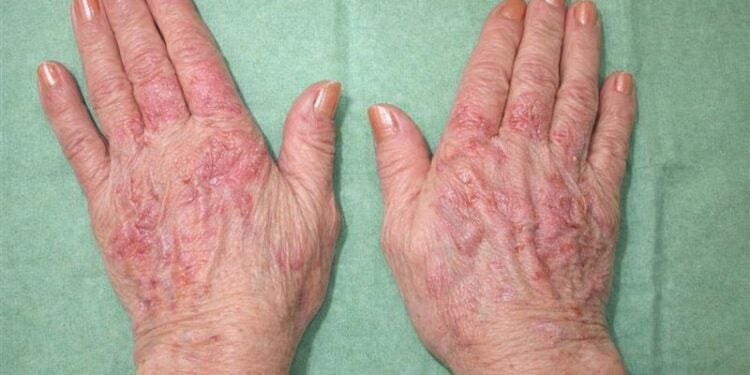
Hand eczema often appears when the skin becomes inflamed due to irritants or allergens, especially after repeated contact with water, soaps, detergents, or certain materials at work. In many people, it manifests as dryness, itching, and cracks that come and go.
What does eczema on the hands mean, and what do you notice first?
Eczema is a broad term for skin inflammation, and on the hands it is often associated with contact dermatitis or atopic-prone skin. It can appear as redness, roughness, and scaling, and sometimes painful fissures develop.
In more severe outbreaks, small blisters or itchy areas may appear, especially if the skin barrier is damaged. Scratching usually worsens the cycle because it increases irritation and makes the skin more prone to breaking down.
What are the most common causes of eczema on the hands?
The most common cause is repeated exposure to everyday irritants, even something as simple as having wet hands many times a day. Cleaning products, solvents, cement, gloves, or continuous friction can also contribute, depending on the type of work.
In other cases, the trigger is allergic, for example, to nickel, fragrances, preservatives, or components of gloves. Distinguishing between irritant and allergic reactions is important because the prevention plan changes, and sometimes skin tests are needed for confirmation.
| Type | Examples | Usual track |
|---|---|---|
| Annoying | water and soap | worsens with washing |
| Chemicals | detergent bleach | outbreak after cleaning |
| Allergen | nickel fragrances | outbreak with contact |
| Wet work | health hairdressing | wet hands |
Why do work and climate have such a significant impact on hand eczema?
In work environments with wet hands, repeated washing, or prolonged use of gloves, the skin loses some of its natural protection and becomes more vulnerable. This is why hand eczema is common in healthcare, hairdressing, cleaning, hospitality, and some industrial trades.
In some people, cold, dry air or low-humidity indoor environments can worsen dryness and cracking. When this is combined with increased hand hygiene, even a mild irritant can be enough to trigger symptoms.
When is it advisable to consult a doctor and how is the cause confirmed?
If hand eczema lasts for weeks, comes back often, or affects your job, it is common to see a health professional to assess whether it is irritant, allergic, or part of atopic dermatitis. The AEDV notes that irritant and allergic forms exist, and that repeated exposure to water and detergents is a typical trigger, which helps guide diagnosis.
During the consultation, they may ask about products and daily tasks, review gloves, gels, soaps, and workplace exposures, and in some cases, order patch tests to identify contact allergens. If there is intense pain, deep fissures, discharge, or signs of infection, it is advisable to seek evaluation without delay.
This text is for informational purposes only and does not replace medical advice. Always consult official sources and follow the instructions of your doctor or pharmacist.