
- What is rosacea and how to recognize it? - February 3, 2026
- Impetigo: what it is and when to seek medical advice - February 2, 2026
- Bactrim in Spain: what is its equivalent in pharmacies? - February 1, 2026
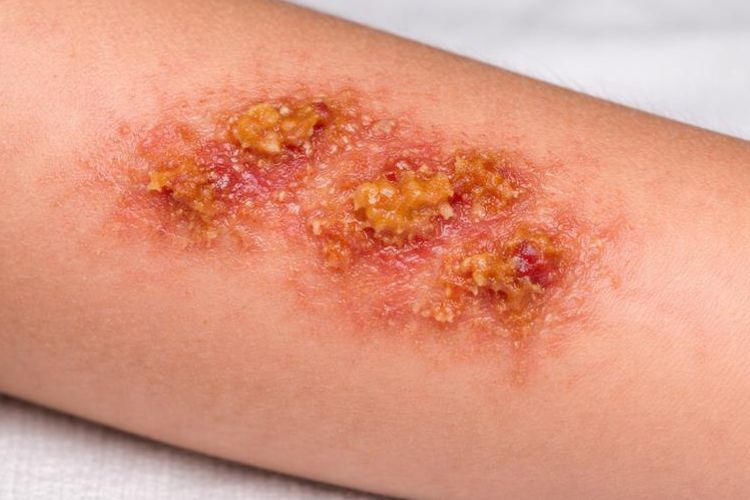
Impetigo is a superficial, contagious skin infection that often forms sores or blisters with yellowish crusts.
It often starts around the nose or mouth, although it can also appear on the arms or legs. It can be itchy, and scratching can spread the lesion to other areas or to other people through close contact, shared clothing, or towels.
How to recognize impetigo?
Impetigo is usually caused by bacteria such as Staphylococcus aureus, group A streptococcus, or a mixture of both. It is most commonly seen in young children, but can also occur in adolescents and adults, especially if there are minor wounds, insect bites, or pre-existing dermatitis.
A typical sign is sores or blisters that break, ooze for a few days, and then form honey-colored scabs. For many people, itching is the main complaint, so it's important to pay attention to your skin and not dismiss these lesions as normal.
When is it advisable to seek medical evaluation?
If you suspect impetigo, it's advisable to seek medical evaluation to confirm the diagnosis and receive guidance on treatment and preventing further spread. This is especially important when there are extensive lesions, general discomfort, or involvement of sensitive areas such as around the eyes.
The following table summarizes, for guidance purposes, signs that often warrant a quicker consultation. It does not replace professional assessment, but it helps to distinguish between a small, localized injury and situations with a higher risk of complications or contagion.
| Situation | Reason for consultation |
|---|---|
| Injuries that spread or appear in several areas | Confirm diagnosis and prevent contagion |
| General malaise or worsening | Assess progress and need for treatment |
| Injuries near the eyes or in a baby | Increased risk and need for review |
Impetigo treatment and what to expect
Management depends on confirming the cause and deciding whether a topical antibiotic is enough or whether an oral option is needed. That is why clinicians may mention mupirocin for superficial skin infections.
If treated appropriately, the lesions tend to improve within a few days, although the exact timeframe varies from case to case. In the meantime, good hygiene and avoiding sharing towels can help reduce transmission within the family.
This text is for informational purposes only and does not replace an individual medical evaluation. If you suspect impetigo, consult a healthcare professional to confirm the diagnosis and the most appropriate treatment.