
We include products we think are useful. If you buy through the links on this page, we may receive a commission.
- Is there a generic version of Forxiga available in the UK? - March 21, 2026
- Fucidin cream: what is it used for in Spain - March 20, 2026
- How much does Monurol cost in Spanish pharmacies? - March 10, 2026
The perioral dermatitis rash is an inflammatory eruption around the mouth that can look like acne or rosacea and can sometimes worsen with topical corticosteroids, so in Spain it helps to recognize it early and ask a pharmacist or a doctor what to do next.
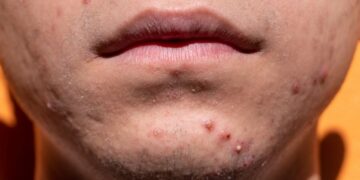
It usually appears as red bumps or small papules with redness and sometimes scaling around the mouth, although it can also appear near the nose or eyes. It is not a contagious infection, but it can be persistent.
Perioral dermatitis
It's an inflammatory skin condition on the face that is concentrated around the mouth and can cause irritation or burning. It's most common in young adults, but can also occur in children. The exact cause isn't always identified.
What does perioral dermatitis look like and what is it confused with?
There is usually a ring of lesions around the mouth, and the lip border is often spared. Because it looks similar to acne or rosacea, it helps to note the location and whether it itches or burns more than it hurts.
The quick comparison below summarizes typical clues that can help when someone is unsure whether perioral dermatitis, acne, or rosacea is the cause. It is not intended to replace a clinical evaluation, but it can help you better understand what you see in the mirror.
| Problem that resembles | A clue that usually helps |
|---|---|
| Perioral dermatitis | Fine grains of sand around the mouth |
| Acne | Blackheads and lesions in various areas |
| Rosacea | Central reddening and hot spots |
What usually triggers or worsens it?
Topical corticosteroids applied to the face are a classic trigger, even if they initially appear to improve the condition. Outbreaks have also been described with some cosmetics or highly occlusive creams, and in some people, with fluoride toothpastes.
What practical steps are usually recommended?
In practice, many dermatologists start by simplifying the routine and removing irritants, and then decide whether a prescription treatment is needed; when an alternative to corticosteroids is discussed for sensitive areas, options like Protopic or Elidel may come up, always under medical guidance.
If the outbreak is severe, spreads, affects the eyes, or doesn't improve within a few weeks, it's wise to make an appointment with your doctor or dermatologist. A pharmacy can advise you on gentle hygiene and moisturizing products and when to refer you.
This text is for informational purposes only and does not replace medical advice. For diagnosis, prescription treatments, duration, and correct use, consult your doctor or pharmacist and always review the official product information they recommend.