

We include products we think are useful. If you buy through the links on this page, we may receive a commission.

- Medicare card replacement in the United States - May 4, 2026
- What is Hidroferol called in the UK? - April 26, 2026
- Panadol in the UK: Is it paracetamol? - April 25, 2026
When choosing a vitamin D supplement, the dosage and format are usually more important than the brand. For self-care purchases, there are three key factors. D3 generally performs better than D2, the NRV (Nutrient Reference Value) on the packaging falls short as a practical guide, and very high doses are in a different category altogether.
Vitamin D2 or D3?
On labels you will mostly see two forms. Vitamin D2, also called ergocalciferol, is usually linked to plant or fungal sources. Vitamin D3, or cholecalciferol, is the form the body makes with sun exposure and it usually comes from lanolin, although there are also options derived from lichens.
The difference isn't that D2 is useless. Both forms can raise vitamin D levels, but D3 usually does it better and maintains them longer, so it's the one most often requested when someone is looking for a general supplement.
What do IU, micrograms, and NRV mean?
Vitamin D supplements are usually expressed in IU or micrograms. The conversion is simple. One microgram is equivalent to 40 IU, so 10 µg is 400 IU, 25 µg is 1000 IU, and 100 µg is 4000 IU.
The main confusion usually starts with the NRV. For vitamin D, European labelling still uses 5 µg as the reference value, so a product with 100 µg can show 2000% of the NRV and look much more extreme than it really is.
EFSA sets an adequate intake of 600 IU (15 µg) per day when skin synthesis is minimal. The NHS uses 400 IU (10 µg) as a general reference in autumn and winter, and the NIH in the United States uses 600 IU (15 µg) for adults aged 19 to 70 and 800 IU (20 µg) from age 71 onwards. That is why the NRV on the label is better read as a labelling reference, not as the full guide.
What changes between 400, 1000 and 4000 IU?
If you see 400 IU, you're looking at a strength that aligns with the low maintenance base mentioned in several public recommendations. 1000 IU already represents a price above that floor and is generally more appealing to those seeking a mid-range daily option, for example, if they spend little time outdoors or are looking for a more stable investment for the colder months.
The 4000 IU dose falls into a different category. Both the EFSA and the NIH set 100 µg or 4000 IU as the tolerable upper daily limit for adults, so it's not the most neutral option for routine purchases. It's more commonly seen in people with different circumstances, such as low sun exposure, dark skin, advanced age, obesity, or absorption problems.
That doesn't mean the highest dose is automatically the best. Sun exposure, season, age, skin tone, and the reason for using the product all significantly affect how the packaging is interpreted.
Basic D3 400 IU
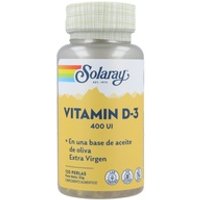
Why it might fit
- 400 IU (10 µg) per pearl
- Simple formula with D3
- 120 pearls per bottle
What should be valued
- It falls below the 600 to 800 IU range mentioned in several public references.
What about doses of 25,000 IU or 50,000 IU?
Yes, in many cases the logic is monthly or loading-dose based rather than daily. In CIMA, there are 25,000 IU presentations used with a monthly maintenance schedule and 50,000 IU presentations framed as loading doses before moving to a monthly schedule.
That completely changes the context. If you compare a daily supplement with one containing 25,000 or 50,000 IU, you're not just comparing potency. You're comparing a different dosage regimen and a much more clinical context.
When does a formula with vitamin K2 make sense?
Vitamin K2 is not listed as a requirement in the general recommendations used for vitamin D. These formulas are of particular interest to those seeking a combination more focused on bone health, as much of the research is concentrated on postmenopausal women and osteoporosis.
Even so, the evidence isn't all the same. It's not advisable to treat K2 as a mandatory component of any vitamin D supplement. Furthermore, if someone is taking anticoagulants, this combination warrants separate review by a healthcare professional.
D3 with K2 800 IU
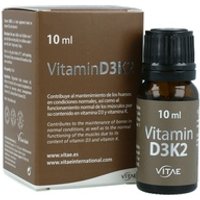
Why it might fit
- 800 IU (20 µg) of D3 per drop
- Add K2 20 µg per drop
- Liquid format with clear dosage
What should be valued
- K2 is not a necessary extra in all vitamin D purchases
Drops or pearls?
If the dose and form of vitamin D are equivalent, the format alone doesn't seem to significantly change its effectiveness. The difference usually lies less in theoretical absorption and more in how the product fits into your routine.
Drops allow for more precise dosage control and are often the better choice for those who prefer a liquid format or have difficulty swallowing. Pearls, on the other hand, are usually preferred when a simple routine and a fixed daily dose are desired.
Liquid D3 800 IU
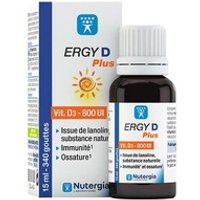
Why it might fit
- 800 IU (20 µg) per drop
- Easy-to-adjust liquid format
What should be valued
- D3 only, without added K2
The most useful thing to read on the packaging isn't focusing on the NRV percentage or the highest number on the label. What's important is understanding whether you're dealing with a low, medium, or high dose and whether the format truly fits into your routine.
This text is for informational purposes only and does not replace medical advice. Always consult the official product packaging and follow the instructions of your doctor or pharmacist.
Discover more from Vitals Today
Subscribe to get the latest posts sent to your email.